

Why Choose Us
Global On-Site Installation and training & Local After-Sales Service & On-site Support
Local Partnership Service Available.Professional engineers available for worldwide installation, training, commissioning, and 24/7 remote technical assistance.
Customized Automation Solutions
Our engineering team works closely with customers to design and deliver tailored automation systems that fit specific manufacturing workflows - from smart factory integration to turnkey SMT line setups.
Complete Turnkey Production Line Solution
From single machines to fully integrated SMT and automation lines, we provide one-stop solutions tailored to your production needs.
Fast After-Sales Service & Spare Parts Support
Quick-response after-sales service with stable spare parts supply to minimize downtime and keep your production running smoothly.


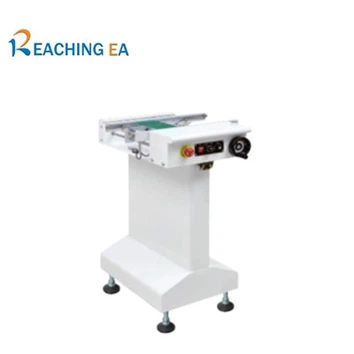


Types of SMT Handling Machine
SMT handling machines are used to transfer, buffer, load, unload, flip, or separate PCBs automatically during the SMT production process. They help improve production efficiency, reduce manual handling, and ensure smooth PCB transportation between SMT equipment.
1. PCB Loader
PCB Loaders automatically load bare PCBs from magazines onto the SMT production line. They are usually installed at the beginning of the SMT line and reduce manual board feeding.
Features:
- Automatic magazine loading
- Stable PCB transfer
- Adjustable rail width
- SMEMA communication support
Applications:
- SMT assembly lines
- PCB production factories
- Automated electronics manufacturing
2. PCB Unloader
PCB Unloaders collect finished PCBs from the SMT line into magazines automatically after production.
Features:
- Automatic board collection
- Stable unloading system
- Multiple magazine options
- Easy operation
Applications:
- End of SMT production lines
- High-volume PCB assembly
3. NG PCB Unloader
The NG Unloader is designed to separate OK and NG boards automatically after AOI inspection. It transfers defective boards to a dedicated NG magazine while good boards continue normally.
Features:
- AOI signal integration
- Automatic OK/NG board sorting
- Dual magazine system
- Intelligent PCB handling
Applications:
- AOI inspection lines
- Quality control processes
- Smart SMT factories
4. PCB Conveyor
PCB Conveyors transfer PCBs between SMT machines smoothly and safely. They are one of the most common SMT handling machines.
Features:
- Stable PCB transportation
- Adjustable conveyor width
- Inspection mode available
- Compact design
Applications:
- Connecting SMT equipment
- PCB inspection stations
- Manual assembly sections
5. PCB Link Conveyor
Link Conveyors are used to connect different SMT machines while maintaining smooth PCB flow across the line.
Features:
- Flexible line connection
- Stable PCB transfer
- Compact structure
- Easy maintenance
Applications:
- SMT production line integration
- Machine-to-machine transfer
6. PCB Inspection Conveyor
Inspection Conveyors provide an operator inspection area during PCB transportation.
Features:
- ESD working table
- LED lighting option
- Smooth PCB movement
- Convenient visual inspection
Applications:
- SMT visual inspection
- Manual checking stations
- Rework areas
7. PCB Buffer Conveyor
Buffer Conveyors temporarily store PCBs during line imbalance or machine downtime to improve production efficiency.
Features:
- PCB buffering function
- Automatic board storage
- Line balancing support
- Continuous production protection
Applications:
- High-speed SMT lines
- Production balancing systems
8. PCB Turning Conveyor
Turning Conveyors rotate PCBs to change board direction within the SMT line.
Features:
- 90° / 180° PCB rotation
- Smooth board transfer
- Automatic operation
- Flexible line layout
Applications:
- Double-sided PCB production
- Complex SMT line layouts
9. PCB Reject Conveyor
Reject Conveyors separate defective PCBs from good boards automatically.
Features:
- Defective PCB isolation
- Automatic sorting
- Stable conveyor system
- Easy operation
Applications:
- AOI and SPI lines
- PCB quality control
10. PCB Destacker
PCB Destackers separate stacked PCBs automatically and feed them one by one into the SMT line.
Features:
- Automatic PCB separation
- Stable feeding system
- High efficiency
- Compact design
- Applications:
- Automated PCB feeding
- SMT front-end process
Why SMT Handling Machines Are Important
SMT handling machines help manufacturers:
- Reduce manual labor
- Improve production efficiency
- Protect PCBs from damage
- Achieve fully automatic SMT production
- Improve line stability and product quality
Modern SMT handling equipment is widely used in:
- Consumer electronics
- Automotive electronics
- LED manufacturing
- Medical electronics
- Industrial control systems
For advanced SMT lines, handling machines work together with pick and place machines, SPI, AOI, reflow ovens, and wave soldering systems to create a fully automated production process.
Why Choose Our SMT Handling Machine
1. Complete SMT Line Solution
We provide a full range of SMT handling machines including PCB loaders, unloaders, conveyors, buffers, NG unloaders, turning conveyors, and inspection conveyors to support complete SMT production lines.
2. Stable and Reliable Performance
Our SMT handling machines are designed for continuous industrial production with stable PCB transportation, precise control systems, and reliable operation for long-term use.
3. Flexible Customization
We can customize machine size, rail width, conveyor length, PCB direction, magazine capacity, and automation functions according to different production requirements.
4. Compatible with Different SMT Brands
Our machines support SMEMA communication and can easily connect with major SMT equipment brands such as Panasonic, Yamaha, Fuji, Juki, Hanwha, ASM, and more.
5. Easy Operation and Maintenance
The user-friendly control system makes operation simple for operators and engineers. The machines are also designed for convenient maintenance and quick setup.
6. Improve Production Efficiency
Automatic PCB loading, unloading, buffering, and transportation reduce manual labor and improve overall SMT line productivity.
7. High Quality Components
We use high-quality motors, sensors, pneumatic parts, and electrical components to ensure stable machine performance and long service life.
8. Support for Smart Factory Automation
Our SMT handling equipment can be integrated into automated SMT production lines to support intelligent manufacturing and Industry 4.0 requirements.
9. Global Technical Support
We provide remote technical support, installation guidance, spare parts support, and after-sales service for customers worldwide.
10. Competitive Price and Cost-Effective Solution
We offer reliable SMT handling machines with competitive pricing to help customers reduce production costs while maintaining high efficiency and quality.
11. Rich Industry Experience
With experience in SMT automation and electronics manufacturing, we understand real production requirements and provide practical solutions for different industries.
12. Suitable for Various Industries
Our SMT handling machines are widely used in:
- Consumer electronics
- Automotive electronics
- LED manufacturing
- Industrial control
- Medical electronics
- Communication equipment
- PCB assembly factories
SMT Handling Machine Working Principle
SMT handling machines are designed to automatically transport, buffer, load, unload, or separate PCBs during the SMT production process. They work together with SMT equipment such as printers, pick and place machines, AOI, SPI, and reflow ovens to ensure smooth and continuous PCB flow.
Basic Working Principle
The working principle of SMT handling machines is based on:
- Conveyor transportation
- Sensor detection
- Pneumatic or motor-driven movement
- PLC automatic control
- SMEMA communication between machines
The machine automatically detects incoming PCBs, transfers them to the correct position, and sends them to the next process without manual operation.
Main Working Process
1. PCB Detection
Sensors detect when a PCB arrives at the handling machine. The system confirms the PCB position and prepares for transportation.
2. PCB Transportation
The conveyor system transfers the PCB smoothly using belts, chains, or motorized rails. The transport speed is controlled automatically to match the SMT production line.
3. Positioning and Alignment
The machine aligns the PCB accurately to ensure stable transfer between SMT equipment. Adjustable rails support different PCB sizes.
4. Automatic Communication
SMT handling machines communicate with upstream and downstream equipment through SMEMA signals. This ensures synchronized production and prevents PCB congestion.
5. Special Function Operation
Different SMT handling machines perform different functions during the process:
- PCB Loader → loads bare PCBs onto the SMT line
- PCB Unloader → collects finished PCBs
- Buffer Conveyor → temporarily stores PCBs
- NG Unloader → separates defective boards
- Turning Conveyor → changes PCB direction
- Inspection Conveyor → provides manual inspection position
6. PCB Transfer to Next Process
After the operation is completed, the PCB is automatically transferred to the next SMT machine.
Key Technologies Used
Conveyor System
Used for stable PCB transportation with adjustable width for different board sizes.
01
PLC Control System
Controls machine logic, movement, sensors, and communication automatically.
02
Sensors
Detect PCB arrival, position, and transfer status to ensure smooth operation.
03
Pneumatic System
Used in loaders, unloaders, stoppers, and lifting systems for automatic movement.
04
SMEMA Interface
Allows communication between different SMT machines for fully automatic production.
05
How to Choose SMT Handling Machine?
Choosing the right SMT handling machine is very important for improving SMT production efficiency, reducing downtime, and ensuring stable PCB transportation. Different SMT production lines require different handling solutions depending on PCB type, production capacity, and automation level.
1. Confirm Your SMT Production Requirements
Before selecting an SMT handling machine, you should clearly understand:
- PCB size range
- PCB thickness and weight
- Production capacity
- Product type
- Line layout
- Automation requirements
For high-volume production, fully automatic handling systems are recommended. For flexible or small-batch production, simpler conveyor solutions may be sufficient.
2. Choose the Correct SMT Handling Machine Type
Different SMT handling machines have different functions in the SMT line.
PCB Loader
Suitable for automatic PCB feeding at the beginning of the SMT line.
Recommended for:
- Automatic production lines
- Magazine PCB loading
- Reducing manual labor
PCB Unloader
Used for automatic PCB collection after production.
Recommended for:
- High-volume production
- Automatic PCB collection
PCB Conveyor
Used to transfer PCBs between SMT machines.
Recommended for:
- Standard SMT lines
- Machine connection
- PCB inspection areas
Buffer Conveyor
Used to temporarily store PCBs during line imbalance.
Recommended for:
- High-speed SMT lines
- Reducing production interruption
NG Unloader / Reject Conveyor
Used to separate defective boards after AOI inspection.
Recommended for:
- Smart factory automation
- Quality control systems
Turning Conveyor / PCB Inverter
Used to change PCB direction or support double-sided PCB production.
Recommended for:
- Complex SMT line layouts
- Dual-side PCB assembly
3. Check PCB Size Compatibility
The handling machine should support your PCB dimensions:
- Minimum PCB size
- Maximum PCB size
- PCB thickness
- Edge clearance requirements
Adjustable rail width is important for handling different PCB products efficiently.
4. Consider Production Capacity
Production speed is one of the most important selection factors.
You should evaluate:
- Line takt time
- PCB transfer speed
- Daily production volume
- Future expansion plans
For high-speed SMT lines, stable conveyor systems and buffering functions are especially important.
5. Verify SMEMA Compatibility
Most SMT lines use SMEMA communication to connect machines automatically.
Choose SMT handling machines that support:
- SMEMA interface
- Automatic machine communication
- Synchronization with upstream and downstream equipment
This helps ensure smooth PCB transfer and reduces line stoppage.
6. Evaluate Machine Stability and Build Quality
A stable handling system helps reduce PCB damage and production downtime.
Important factors include:
- Conveyor stability
- Motor quality
- Sensor reliability
- Pneumatic component quality
- Frame structure
High-quality components improve long-term machine reliability.
7. Consider Ease of Operation and Maintenance
Good SMT handling machines should offer:
- User-friendly interface
- Easy rail adjustment
- Simple maintenance
- Fast troubleshooting
- Easy spare part replacement
This reduces operator training time and maintenance costs.
8. Think About Future Automation Upgrades
Modern SMT factories increasingly require intelligent automation.
It is better to choose machines that support:
- Smart factory integration
- MES system compatibility
- Automatic PCB tracking
- Future line upgrades
This helps improve long-term investment value.
9. Evaluate Supplier Technical Support
Reliable technical support is very important for SMT production.
A good supplier should provide:
- Remote technical support
- Installation guidance
- Spare parts service
- After-sales support
- Fast response time
Many SMT engineers on Reddit also mention that stable support and full-line coordination are often more important than only focusing on one machine.
10. Balance Budget and Long-Term Cost
Do not only focus on the initial machine price.
You should also consider:
- Maintenance cost
- Spare part availability
- Machine lifespan
- Downtime risk
- Production efficiency improvement
A stable and reliable SMT handling machine can reduce long-term production cost significantly.
Conclusion
The best SMT handling machine depends on your:
- PCB type
- Production volume
- Automation level
- Factory layout
- Future expansion plan
Choosing suitable and reliable SMT handling equipment helps improve SMT line efficiency, reduce labor costs, and achieve stable automatic production.
Case Show
Full LED Production Line

SMT Handling Machine FAQ
Q: 1. What is an SMT handling machine?
A: An SMT handling machine is used to transfer, load, unload, buffer, or separate PCBs automatically in an SMT production line. It helps improve automation and production efficiency.
Q: 2. What types of SMT handling machines do you provide?
A: We provide various SMT handling machines including:
- PCB Loader
- PCB Unloader
- PCB Conveyor
- Inspection Conveyor
- Buffer Conveyor
- NG Unloader
- Reject Conveyor
- Turning Conveyor
- PCB Destacker
Q: 3. What PCB sizes are supported?
A: Our SMT handling machines support different PCB sizes depending on the model. Customized rail width and conveyor length are also available.
Q: 4. Can your SMT handling machines connect with other SMT brands?
A: Yes. Our machines support SMEMA communication and can connect with major SMT brands such as Panasonic, Yamaha, Fuji, Juki, Hanwha, ASM, and more.
Q: 5. Are your machines suitable for automatic SMT production lines?
A: Yes. Our SMT handling equipment is designed for fully automatic SMT production lines and smart factory integration.
Q: 6. Can you customize the machine according to our production line?
A: Yes. We can customize:
- Machine size
- Conveyor length
- Rail width
- PCB direction
- Magazine quantity
- Special automation functions
according to customer requirements.
Q: 7. What industries use SMT handling machines?
A: Our SMT handling machines are widely used in:
- Consumer electronics
- Automotive electronics
- LED manufacturing
- Medical electronics
- Industrial control systems
- Communication equipment
Q: 8. What is the function of a buffer conveyor?
A: A buffer conveyor temporarily stores PCBs when one machine stops or production speed becomes unbalanced. It helps reduce downtime and improve line efficiency.
Q: 9. What is the difference between a PCB loader and unloader?
A: A PCB loader automatically feeds bare PCBs into the SMT line, while a PCB unloader automatically collects finished PCBs after production.
Q: 10. What is an NG unloader?
A: An NG unloader separates defective PCBs from good PCBs automatically after AOI inspection to improve quality control.
Q: 11. Are your SMT handling machines easy to operate?
A: Yes. Our machines feature a user-friendly control system, simple operation interface, and easy maintenance design.
Q: 12. Do you provide installation and technical support?
A: Yes. We provide:
- Remote technical support
- Installation guidance
- After-sales service
- Spare parts support
for global customers.
Q: 13. What voltage can your machines support?
A: We can provide machines compatible with different voltage standards according to customer country requirements.
Q: 14. How do I choose the right SMT handling machine?
A: You should consider:
- PCB size
- Production capacity
- SMT line layout
- Automation requirements
- Production speed
- Factory space
Our team can also recommend suitable solutions based on your production needs.
Q: 15. Can SMT handling machines improve production efficiency?
A: Yes. SMT handling machines help reduce manual labor, improve PCB transfer stability, reduce downtime, and increase overall production efficiency.
We're well-known as one of the leading smt handling machine manufacturers and suppliers in China. Please feel free to buy high quality smt handling machine made in China here from our factory. For price consultation, contact us.
SMT Reject Conveyor after AOI, Magazine Unloader with SMEMA Interface, pcb inspection conveyor