

Picking the right drive system for an SMT Reject Conveyor is a big deal. As an SMT Reject Conveyor supplier, I've seen firsthand how crucial it is to get this choice right. In this blog, I'll share some tips on how to select the appropriate drive system for your SMT Reject Conveyor.
Understanding the Basics of SMT Reject Conveyors
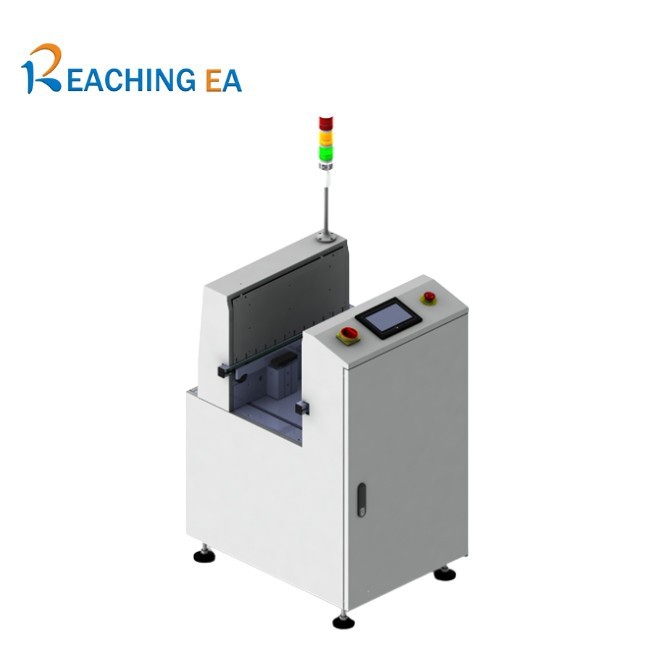
Before we dive into drive systems, let's quickly go over what an SMT Reject Conveyor does. SMT (Surface Mount Technology) is all about mounting electronic components onto printed circuit boards (PCBs). Sometimes, during the SMT process, some components might be defective or misaligned. That's where the SMT Reject Conveyor comes in. It's designed to remove these rejected PCBs from the production line, ensuring that only good-quality products move forward.
Types of Drive Systems
There are a few different types of drive systems you can choose from for your SMT Reject Conveyor. Each has its own pros and cons, so it's important to understand them before making a decision.
Belt Drive System
The belt drive system is one of the most common types used in SMT Reject Conveyors. It consists of a belt that runs over pulleys, powered by a motor. The belt moves the PCBs along the conveyor.
Advantages:
- Smooth operation: Belt drive systems offer a smooth and quiet operation, which is great for delicate PCBs.
- Flexibility: They can be easily adjusted to different conveyor lengths and widths.
- Low cost: Belt drive systems are generally more affordable compared to other types.
Disadvantages:
- Belt wear: Over time, the belt can wear out and need to be replaced.
- Limited speed: Belt drive systems may not be suitable for high-speed applications.
Chain Drive System
Chain drive systems use a chain to transfer power from the motor to the conveyor. The chain is connected to sprockets, which rotate and move the conveyor.
Advantages:

- High strength: Chain drive systems can handle heavy loads and are more durable than belt drive systems.
- High speed: They are suitable for high-speed applications.
- Precise positioning: Chain drive systems can provide more precise positioning of the PCBs.
Disadvantages:
- Noise: Chain drive systems can be noisy, which may not be ideal in some environments.
- Maintenance: They require more maintenance compared to belt drive systems.
Gear Drive System
Gear drive systems use gears to transfer power from the motor to the conveyor. The gears are meshed together, and as the motor rotates, the gears turn and move the conveyor.
Advantages:
- High torque: Gear drive systems can provide high torque, which is useful for moving heavy loads.
- Precise control: They offer precise control over the speed and movement of the conveyor.
- Long lifespan: Gear drive systems are generally more durable and have a longer lifespan compared to other types.
Disadvantages:
- Cost: Gear drive systems are usually more expensive than belt or chain drive systems.
- Complexity: They are more complex and require more maintenance.
Factors to Consider When Choosing a Drive System
Now that you know the different types of drive systems, let's look at some factors to consider when choosing the appropriate one for your SMT Reject Conveyor.
Load Capacity
The load capacity of your SMT Reject Conveyor is an important factor to consider. You need to choose a drive system that can handle the weight of the PCBs you'll be transporting. If you're dealing with heavy PCBs, a chain or gear drive system might be a better choice.
Speed Requirements
The speed at which your SMT Reject Conveyor needs to operate is another important factor. If you need a high-speed conveyor, a chain or gear drive system may be more suitable. However, if you don't need high speeds, a belt drive system may be sufficient.
Environment
The environment in which your SMT Reject Conveyor will be operating is also important. If the environment is noisy, a belt drive system may be a better choice as it is quieter. If the environment is dusty or dirty, a chain or gear drive system may be more suitable as they are more durable.
Maintenance
Maintenance is an important consideration when choosing a drive system. Belt drive systems generally require less maintenance compared to chain or gear drive systems. However, chain and gear drive systems may last longer and require less frequent replacement.
Making the Right Choice
Choosing the appropriate drive system for your SMT Reject Conveyor is a decision that should not be taken lightly. It's important to consider all the factors mentioned above and choose a drive system that meets your specific needs.
If you're still not sure which drive system is right for you, don't hesitate to reach out to us. As an SMT Reject Conveyor supplier, we have the expertise and experience to help you make the right choice. We can provide you with detailed information about the different drive systems and help you select the one that's best for your application.
In addition to SMT Reject Conveyors, we also offer a range of other SMT handling machines, such as SMTAutomatic Conveyor, SMT Destacker, and SMT Inverter Flipper Conveyor. These machines can help you streamline your SMT production process and improve efficiency.
If you're interested in learning more about our products or have any questions, please feel free to contact us. We'd be happy to discuss your requirements and provide you with a customized solution.
References
- Industry standards and guidelines for SMT handling equipment.
- Manufacturer's specifications and documentation for drive systems.
- Case studies and real-world examples of SMT Reject Conveyor installations.