

As a leading supplier of SMT NG Unloaders, I am often asked about the fault diagnosis function of our equipment. In this blog post, I will delve into the details of what the fault diagnosis function of an SMT NG Unloader entails, its importance, and how it benefits our customers.
Understanding the SMT NG Unloader
Before we discuss the fault diagnosis function, let's briefly understand what an SMT NG Unloader is. An SMT (Surface Mount Technology) NG Unloader is a crucial component in the SMT production line. It is responsible for removing non - good (NG) printed circuit boards (PCBs) from the production line. These NG PCBs may have defects such as incorrect component placement, soldering issues, or other manufacturing flaws.
The Fault Diagnosis Function
The fault diagnosis function of an SMT NG Unloader is a sophisticated system designed to identify, analyze, and report any issues that may occur during the operation of the equipment. This function plays a vital role in ensuring the smooth and efficient operation of the SMT production line.
Real - Time Monitoring
One of the key aspects of the fault diagnosis function is real - time monitoring. The SMT NG Unloader is equipped with a series of sensors and monitoring devices that continuously track the performance of various components. These sensors can detect parameters such as conveyor speed, motor temperature, and the position of PCBs on the conveyor. By constantly monitoring these parameters, the system can quickly identify any deviations from the normal operating conditions.
For example, if the conveyor speed suddenly drops below the set value, the fault diagnosis system will immediately detect this change and flag it as a potential issue. This real - time monitoring allows for prompt action to be taken, reducing the risk of production downtime.
Error Detection and Classification
The fault diagnosis function is also capable of detecting and classifying different types of errors. It can distinguish between mechanical failures, electrical issues, and software glitches. For instance, if there is a problem with the conveyor belt, such as a tear or misalignment, the system can identify it as a mechanical failure. On the other hand, if there is an issue with the power supply or a short - circuit in the electrical system, it will be classified as an electrical problem.
This classification is important because it helps maintenance personnel to quickly understand the nature of the problem and take appropriate corrective actions. For example, a mechanical failure may require physical repairs, while an electrical issue may need to be addressed by an electrician.
Diagnostic Reports
Once an error is detected, the fault diagnosis function generates detailed diagnostic reports. These reports provide information about the nature of the problem, its location, and possible causes. The reports are usually presented in a user - friendly format, making it easy for operators and maintenance staff to understand.
The diagnostic reports can also include historical data, which is useful for analyzing trends and predicting future issues. For example, if a particular component has a history of frequent failures, the system can alert the maintenance team to perform preventive maintenance on that component.
Importance of the Fault Diagnosis Function
The fault diagnosis function of an SMT NG Unloader offers several important benefits to our customers.
Reducing Downtime
One of the most significant benefits is the reduction of production downtime. By quickly detecting and reporting faults, the system allows for rapid response and repair. This means that the SMT production line can be up and running again in a shorter time, minimizing the impact on production schedules.
Improving Product Quality
The fault diagnosis function also helps to improve product quality. By identifying and removing NG PCBs from the production line, it ensures that only good quality products are sent for further processing. This reduces the number of defective products that reach the market, enhancing customer satisfaction.
Cost Savings
In addition, the fault diagnosis function can lead to cost savings. By preventing major breakdowns and reducing downtime, it reduces the need for expensive emergency repairs. It also helps in optimizing the use of resources, such as spare parts and maintenance personnel.
Related Products and Their Role
As an SMT NG Unloader supplier, we also offer other related products that work in conjunction with the NG Unloader.
The SMT Reject PCB Conveyor is designed to transport rejected PCBs away from the production line. It is an essential part of the SMT production process, ensuring that NG PCBs do not interfere with the normal operation of the line.
The SMT Reject Conveyor is another important component. It provides a reliable and efficient way to handle rejected PCBs, allowing for seamless integration with the SMT NG Unloader.

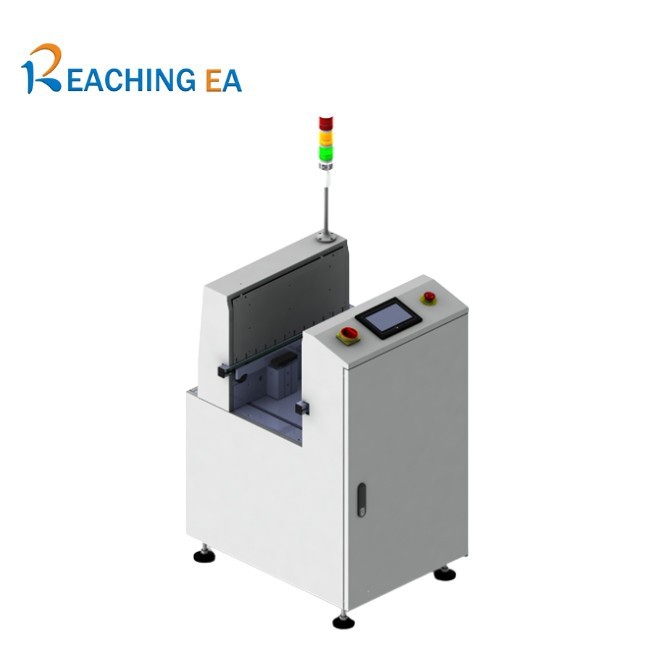
The SMT Destacker is used to separate stacked PCBs before they enter the SMT production line. It ensures a smooth and continuous flow of PCBs, which is crucial for the overall efficiency of the production process.
Conclusion
In conclusion, the fault diagnosis function of an SMT NG Unloader is a powerful tool that offers numerous benefits to our customers. It helps in reducing downtime, improving product quality, and saving costs. By combining the SMT NG Unloader with related products such as the SMT Reject PCB Conveyor, SMT Reject Conveyor, and SMT Destacker, we provide a comprehensive solution for SMT production lines.
If you are interested in learning more about our SMT NG Unloader and its fault diagnosis function, or if you are considering purchasing our products for your SMT production line, we encourage you to contact us for a detailed discussion. Our team of experts is ready to assist you in finding the best solution for your specific needs.
References
- "Surface Mount Technology Handbook" by John H. Lau
- "Automation in Electronics Manufacturing" by Richard R. Schubert